Artemis II's Moon Mission: Breaking New Frontiers
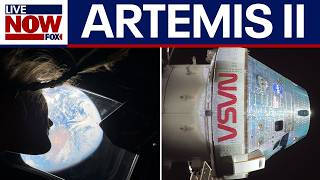
NASA's Artemis II mission captures a groundbreaking image of the moon's far side, sparking renewed interest in lunar exploration. This article delves into the implications of this mission for future space travel and scientific research.
Introduction
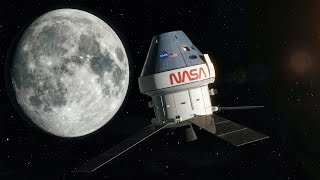
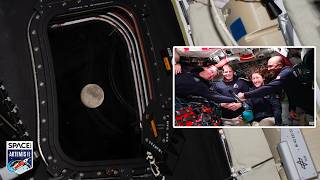
The Artemis II mission has recently captured a new image of the far side of the moon, highlighting the ongoing advancements in space exploration and why these efforts are crucial for scientific progress.
Background/Context
The Artemis program, initiated by NASA, aims to return humans to the moon and establish sustainable exploration by the end of the decade. The program is named after Artemis, the Greek goddess of the moon, and represents a significant leap forward from the Apollo missions of the 1960s and 70s.
Historically, the far side of the moon remained unexplored until the Soviet Luna 3 mission in 1959. Since then, various missions have sought to uncover its mysteries, but no human has set foot on it yet.
Current Situation
The recent image captured by the Artemis II crew offers unprecedented clarity and detail, providing insights into the moon's geology and potential resources. This mission is part of a broader strategy to use the moon as a testing ground for technologies required for Mars exploration.
According to NASA, the Artemis II mission is a crucial step in building momentum for future lunar landings. The mission's success is expected to pave the way for Artemis III, which aims to send astronauts, including the first woman, to the lunar surface.
Deep Analysis
The Artemis II mission highlights the importance of international collaboration in space exploration. The mission's success is attributed to partnerships with space agencies from Canada, Europe, and Japan, each contributing critical technology and expertise.
Additionally, the mission underscores the strategic significance of the moon in global space endeavors. As nations compete for lunar resources, including water ice, which can be converted into rocket fuel, the geopolitical landscape of space exploration is rapidly evolving.
Impact/Outlook
In the short term, the Artemis II mission is expected to boost scientific knowledge and innovation in space technologies. In the long term, it could lead to the establishment of a lunar base, serving as a launchpad for Mars missions and beyond.
Experts predict that the continued exploration of the moon will have far-reaching implications for industries on Earth, including telecommunications, mining, and energy. The extraction of lunar resources could potentially revolutionize these sectors.
Practical Implications
For readers interested in space exploration, the Artemis II mission demonstrates the importance of staying informed about scientific advancements. One can participate by supporting policy initiatives that fund space research and education.
Additionally, individuals can explore career opportunities in the rapidly growing space sector, which demands expertise in fields like engineering, data analysis, and planetary science.
Key Takeaways
- The Artemis II mission captured a groundbreaking image of the moon's far side, enhancing our understanding of lunar geology.
- NASA's Artemis program aims to establish a sustainable human presence on the moon by the end of the decade.
- International collaboration is crucial for the success of space missions, with multiple agencies contributing to Artemis II.
- The mission's success could lead to the development of new technologies and industries on Earth.
- Continued lunar exploration is essential for future Mars missions and could reshape the geopolitical landscape of space.