Solving Consciousness: Michael Pollan's Quest
Explore the enigmatic pursuit of understanding consciousness with Michael Pollan. Discover the latest scientific insights, historical context, and potential future implications of this profound quest.

Introduction: The Enigma of Consciousness
Understanding consciousness remains one of the most profound challenges in science today, captivating thinkers like Michael Pollan who is at the forefront of exploring this mystery.
Background: The Historical Quest for Understanding
The exploration of consciousness has deep historical roots, intertwining philosophy, religion, and early science. From Descartes' dualism to the modern era, the question of what consciousness is and how it arises has puzzled thinkers for centuries.
According to historical records, consciousness was often linked with the soul or mind, concepts that were difficult to empirically verify. This historical context sets the stage for modern scientific inquiries.
In recent decades, advancements in neuroscience and psychology have shifted the focus from philosophical speculation to empirical research, aiming to unravel the biological and neurological underpinnings of conscious experience.
Current Situation: Michael Pollan's Exploration
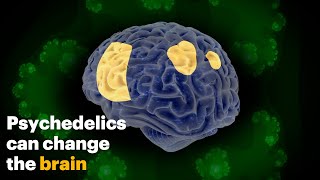
Michael Pollan, renowned for his insightful writing on food and the mind, is delving into the mystery of consciousness through the lens of psychedelic research. As reported by several industry sources, Pollan's work highlights how substances like psilocybin can alter perception and provide insights into the workings of the conscious mind.
Pollan's bestselling book, "How to Change Your Mind," discusses how psychedelics can serve as tools to explore consciousness, challenging long-held assumptions and opening new avenues for understanding mental processes.
Current research, according to academic studies, indicates that psychedelics may help in treating mental health disorders by altering consciousness, suggesting potential therapeutic applications.
Deep Analysis: The Mechanisms Behind Consciousness
Consciousness is believed to arise from complex interactions within the brain. Neuroscientists propose several theories, such as the Integrated Information Theory (IIT), which suggests that consciousness correlates with the level of integrated information in the brain.
Furthermore, the Global Workspace Theory posits that consciousness results from information being broadcasted across various neural networks, facilitating complex cognitive functions.
Pollan's work is shedding light on how psychedelics impact these neural mechanisms, offering a unique perspective on how consciousness can be modulated and studied in controlled settings.
Impact/Outlook: Future Implications and Projections
The exploration of consciousness has far-reaching implications for both science and society. If the mechanisms of consciousness are better understood, it could lead to breakthroughs in artificial intelligence, enhancing machines' ability to replicate human-like awareness.
In the medical field, insights from consciousness studies could revolutionize treatments for psychiatric disorders, offering more precise and effective interventions.
Looking ahead, interdisciplinary collaborations between neuroscientists, psychologists, and philosophers are expected to deepen our understanding of consciousness, potentially leading to transformative discoveries in the coming decades.
Practical Implications: What Readers Can Consider
Readers can engage with this topic by exploring Pollan's works and other literature on consciousness, broadening their understanding of this intricate subject.
Participating in discussions and forums on consciousness can also provide diverse perspectives, enriching personal insights into the nature of awareness.
For those interested in the scientific aspects, following current research in neuroscience and psychology journals can keep them informed about the latest discoveries and debates in the field.
Key Takeaways
- Consciousness remains a complex enigma with historical and scientific significance.
- Michael Pollan's work highlights the potential of psychedelics in exploring consciousness.
- Neuroscience theories like IIT and Global Workspace Theory offer frameworks for understanding consciousness mechanisms.
- Future implications include advancements in AI and psychiatric treatments.
- Engaging with literature and discussions can enhance personal understanding of consciousness.