NASA’s Artemis II: A New Era in Lunar Exploration
NASA’s Artemis II mission marks a pivotal moment in space exploration, poised to further humankind’s understanding of lunar science. Discover how this mission sets the stage for future lunar and Martian exploration, its technological breakthroughs, and the strategic implications for international space collaboration.

Introduction
NASA's Artemis II mission represents a transformative moment in space exploration, aiming to propel human understanding of the moon and beyond. This mission is critical as it is expected to set the foundation for future lunar and Martian exploration.
Background/Context
The Artemis program, announced in 2017, is NASA's initiative to return humans to the Moon by 2024, with the ultimate goal of establishing a sustainable presence. The program builds on the legacy of the Apollo missions, which first landed humans on the Moon in 1969. Artemis II follows Artemis I, an uncrewed mission that successfully tested NASA’s new Space Launch System (SLS) and Orion spacecraft in 2022.
According to NASA, Artemis II will be the first crewed mission to the Moon since Apollo 17 in 1972, highlighting a significant leap in technology and international collaboration.
Current Situation
As of now, Artemis II is slated for a 2026 launch, with a four-member crew on board to orbit the Moon and return safely to Earth. This phase is crucial for testing life support systems and other technologies necessary for future landings.
Industry sources indicate that the mission will include astronauts from NASA, the European Space Agency (ESA), and potentially other international partners, illustrating the collaborative nature of modern space exploration.
Deep Analysis
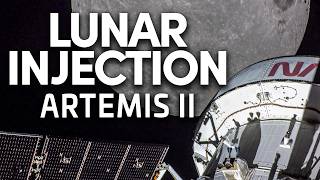
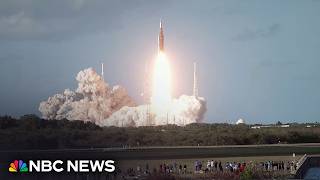
At the core of Artemis II is the Space Launch System (SLS), the most powerful rocket ever built, capable of carrying crew and cargo beyond low Earth orbit. The Orion spacecraft will serve as the crew's home and command center, designed with advanced safety systems.
Expert analyses suggest the mission will test vital technologies, such as the European Service Module, which provides propulsion and life support. This mission also serves as a stepping stone for the Lunar Gateway, a planned space station in lunar orbit that will support future missions.
Impact/Outlook
Short-term, Artemis II is expected to validate technologies that will be used in Artemis III, the mission that aims to land astronauts on the lunar surface. In the long term, these missions could lead to the establishment of a lunar base, serving as a proving ground for Mars exploration.
According to the European Space Agency, the mission enhances international cooperation, potentially leading to joint ventures in space exploration and technology sharing.
Practical Implications
For future scientists and engineers, the Artemis program provides a framework for developing cutting-edge aerospace technologies. Educators can leverage this mission to inspire a new generation of students interested in STEM fields.
Policymakers might consider the Artemis program a model for international collaboration, setting precedents for space legislation and cooperative ventures.
Key Takeaways
- Artemis II is a critical step in NASA’s plan to establish a sustainable lunar presence.
- The mission involves international collaboration, showcasing a new era of global space exploration.
- Technological advancements in Artemis II could pave the way for future Mars missions.
- Artemis II will test key life support and safety systems for deep space travel.
- The mission highlights the role of public and private sectors in advancing space technology.
- Investment in space exploration is likely to foster new technologies and economic growth.
- Educational initiatives can use Artemis as a catalyst to inspire interest in STEM fields.