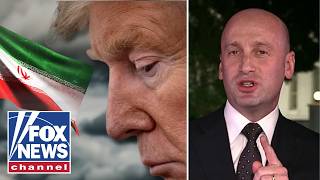
Stephen Miller: Iran Conflict's Endless Implications
Stephen Miller's recent warnings about the potential for an indefinite Iran war highlight deep geopolitical and economic ramifications. Understanding these complexities is crucial for assessing future global security and economic stability.
Introduction
Stephen Miller's recent warnings about the potential for an indefinite war involving Iran underscore significant geopolitical and economic implications that demand careful examination.
Background: The Roots of Tension
The tensions between Iran and the West have deep historical roots, dating back to the 1953 coup that overthrew Iran's prime minister, Mohammad Mossadegh, with CIA involvement. This event set the stage for decades of distrust and conflict. The 1979 Iranian Revolution, which replaced the US-backed Shah with an Islamic Republic, further exacerbated tensions. Subsequent events, such as the Iran-Iraq War and Iran's nuclear program, have kept the region in a state of volatility.
Current Situation: Escalating Conflicts
According to recent reports, the geopolitical climate remains tense with Iran's nuclear ambitions and regional influence being major points of contention. The assassination of Iranian General Qasem Soleimani by the United States in 2020 marked a significant escalation in hostilities. The ongoing conflict in Ukraine has further complicated the global landscape, as Iran's alliances with Russia and other regional players continue to evolve. Data from the International Atomic Energy Agency indicates Iran's uranium enrichment levels are closer than ever to weapons-grade, raising alarm among Western nations.
Deep Analysis: Underlying Causes and Stakeholder Dynamics
The conflict's persistence can be attributed to several factors, including Iran's strategic location in the Middle East, its control over key oil transit routes, and its influence in proxy wars throughout the region. According to geopolitical analysts, power dynamics within Iran, as well as its relationships with Russia and China, significantly impact the conflict's trajectory. The United States and its allies are concerned about Iran's support for groups like Hezbollah and its involvement in Syria, which challenges Western interests in the region.
Impact/Outlook: Future Scenarios
The potential for an indefinite conflict has profound implications. Economically, disruptions in oil supply could lead to significant volatility in global markets. Politically, the conflict could further polarize international alliances, with countries like China and Russia potentially using the situation to their advantage. Military experts warn that any escalation could lead to a broader conflict involving multiple nations, thereby increasing the risk of widespread instability.
Practical Implications: What Can Be Done?
For policymakers, understanding the complex web of alliances and rivalries is crucial. Engaging in multi-lateral diplomatic efforts, supporting non-proliferation initiatives, and fostering regional dialogue are essential steps. Businesses must prepare for potential market volatility by diversifying supply chains and investing in risk management strategies. On a societal level, increasing public awareness about the geopolitical dynamics at play can foster a more informed citizenry.
Key Takeaways
- Stephen Miller's warnings about Iran underscore the conflict's potential for indefinite escalation.
- The historical context of US-Iran relations is key to understanding current tensions.
- Iran's nuclear activities and regional influence remain central to the ongoing conflict.
- Geopolitical and economic implications are vast, affecting global markets and alliances.
- Practical steps involve diplomacy, risk management, and public awareness.