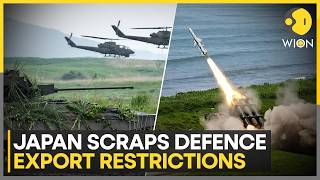
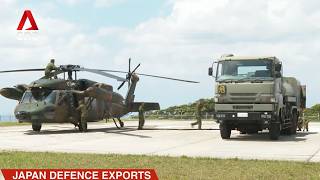
Japan's Historic Shift in Arms Export Policy
Japan's decision to lift most restrictions on weapons exports marks a significant shift in its post-WWII defense policy. This move could reshape global arms markets and geopolitical dynamics, making it crucial for stakeholders to understand the implications.
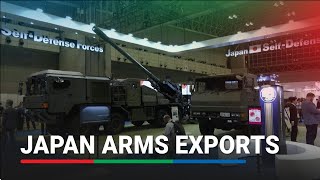
Introduction
Japan's decision to lift most restrictions on weapons exports marks a significant shift in its post-World War II defense policy. This move could reshape global arms markets and geopolitical dynamics, making it crucial for stakeholders to understand the implications.
Background/Context
Since the end of World War II, Japan has maintained a pacifist stance, codified in its constitution, which restricts military activities and arms exports. These policies were influenced by the devastation caused by the war and the subsequent American occupation. For decades, Japan's Self-Defense Forces (SDF) have been limited to defensive capabilities, and arms exports were heavily restricted.
In recent years, however, regional tensions, particularly with North Korea and China, have prompted discussions about enhancing Japan's defense capabilities. The changing security landscape, coupled with economic pressures, has led to gradual policy shifts, culminating in the recent decision to relax arms export restrictions.
Current Situation
Japan's government announced the removal of most restrictions on weapons exports, a decision driven by the need to strengthen its defense industrial base. This policy change allows Japanese defense companies to compete in the global arms market, potentially boosting the nation's economy and technological prowess.
According to Bloomberg, the decision is part of Japan's broader strategy to enhance its defense capabilities and assert its influence in regional security matters. The move has been met with mixed reactions domestically and internationally, with some praising the potential economic benefits while others express concerns about Japan's departure from its pacifist principles.
Deep Analysis
The decision to relax arms export restrictions is influenced by several factors. Firstly, Japan's strategic interests in countering regional threats have necessitated a stronger defense posture. The acquisition of advanced military technologies and increased collaboration with international allies are seen as vital components of this strategy.
Secondly, the economic implications of entering the global arms market are significant. Japan's defense industry, known for its technological innovation, is poised to become a major player in the international arms trade. This could lead to increased research and development, job creation, and economic growth.
However, the decision also raises ethical and geopolitical concerns. Critics argue that exporting arms could contribute to global conflicts and undermine Japan's commitment to peace. Balancing economic interests with ethical considerations remains a key challenge for policymakers.
Impact/Outlook
In the short term, Japan's entry into the arms export market is expected to enhance its defense capabilities and economic standing. As Japanese defense companies establish themselves internationally, collaborations with global partners could lead to technological advancements and increased security cooperation.
In the long term, the policy shift may alter regional power dynamics. Japan's increased military presence could act as a deterrent against regional threats, contributing to stability. However, the potential for arms exports to exacerbate tensions in conflict-prone areas cannot be overlooked.
Practical Implications
For defense companies, understanding Japan's new regulatory environment is crucial for seizing opportunities in the arms market. Companies should assess potential partnerships and collaborations with Japanese firms to leverage technological advancements.
Policymakers and international organizations should monitor the impact of Japan's policy shift on regional security dynamics. Engaging in dialogue and cooperation with Japan can help ensure that arms exports are aligned with global peacekeeping efforts.
Key Takeaways
- Japan's decision to lift arms export restrictions marks a historic shift in its defense policy.
- The move is driven by regional security concerns and economic motivations.
- Japan's defense industry is poised to become a major player in the global arms market.
- Balancing economic interests with ethical considerations remains a key challenge.
- The policy shift may alter regional power dynamics and contribute to stability.
- International cooperation is crucial to ensure responsible arms exports.