AI's Impact on Innovation: Sam Altman's Vision
Explore how AI is reshaping creativity and innovation under Sam Altman's leadership. Discover the profound changes and challenges as AI becomes central to business strategy and creative endeavors.

Introduction: The AI Revolution Under Sam Altman
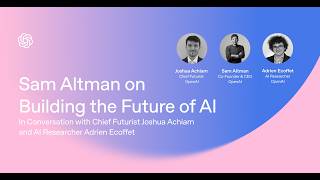
The landscape of innovation is undergoing a seismic shift as artificial intelligence continues to evolve, driven by leaders like Sam Altman. Under his guidance, AI is increasingly seen as the catalyst for a new wave of creativity and business transformation.
Background: A Brief History of AI in Innovation
AI's journey from theoretical concept to practical application has been marked by significant milestones. Initially rooted in the quest for machine learning, AI has evolved through phases of expert systems, deep learning, and neural networks. Today, it stands at the forefront of innovation, influencing industries from healthcare to entertainment.
According to historical analysis, the AI winter of the 1980s and 1990s gave way to breakthroughs in the 21st century, fueled by increased computational power and vast datasets. These developments have laid the groundwork for AI's current role in driving innovation.
Current Situation: AI's Role in Creative and Business Processes
AI's integration into creative processes is exemplified by its impact on industries like film, music, and art. AI algorithms can generate music, design art, and even assist in scriptwriting, challenging traditional notions of creativity. According to industry sources, AI is not just a tool but a collaborator, enhancing human creativity rather than replacing it.
In business, AI's influence is profound, with companies leveraging machine learning for predictive analytics, customer personalization, and operational efficiency. Data from McKinsey indicates that AI adoption is associated with a 20% increase in productivity in companies that effectively utilize the technology.
Deep Analysis: The Mechanisms Behind AI-Driven Innovation
The core mechanism driving AI's impact on innovation is its ability to process and analyze large volumes of data at unprecedented speeds. This capability allows for the identification of patterns and insights that were previously inaccessible. Furthermore, AI's predictive capabilities enable businesses to anticipate market trends and consumer behavior with greater accuracy.
However, the reliance on AI also raises questions about data privacy, algorithmic bias, and the ethical implications of automated decision-making. These challenges highlight the need for robust governance frameworks to ensure AI's responsible use.
Impact/Outlook: AI's Future in Innovation
In the short term, AI is expected to continue enhancing productivity and creativity across sectors. According to Gartner, by 2025, AI-driven innovation will contribute to a 30% increase in global GDP. Long-term projections suggest that AI could lead to the emergence of entirely new industries and economic models, as automation frees up human capital for more strategic and creative tasks.
However, the pace of AI's integration poses challenges, including workforce displacement and the need for continuous upskilling. The World Economic Forum estimates that 85 million jobs may be displaced by 2025, although 97 million new roles may emerge, requiring new skills and competencies.
Practical Implications: Navigating the AI-Driven Future
For individuals and organizations, embracing AI requires a proactive approach to education and skill development. Businesses should invest in AI literacy programs and foster a culture of continuous learning to remain competitive in an AI-driven landscape.
Moreover, collaboration between technologists, ethicists, and policymakers is essential to address the ethical and societal challenges posed by AI. Establishing clear guidelines and standards will be crucial to harnessing AI's full potential while mitigating risks.
Key Takeaways
- AI, under leaders like Sam Altman, is reshaping innovation across industries.
- AI enhances creativity and business processes through data-driven insights.
- Ethical and governance challenges must be addressed for responsible AI use.
- AI's impact on the economy includes both job displacement and creation.
- Continuous learning and skill development are essential in an AI-driven world.
- Collaboration among stakeholders is crucial for ethical AI integration.