Trump's Ballroom: Implications of Court Ruling
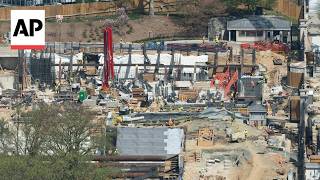
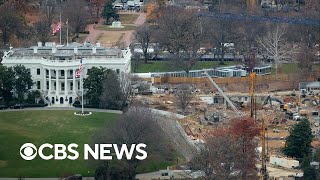
A federal appeals court recently allowed the temporary continuation of White House ballroom construction. This decision has sparked debates about legal implications, historical significance, and future impacts on presidential protocols. Understanding these dimensions is crucial for grasping the broader ramifications of this development.

Introduction
A federal appeals court's decision to allow the temporary continuation of White House ballroom construction has reignited debates over legal, historical, and political implications. This ruling is significant as it touches on issues of presidential authority, historical preservation, and the future of White House infrastructure.
Background and Context
The White House, a symbol of American leadership, has undergone various renovations since its completion in 1800. The construction of a new ballroom, however, marks a significant departure from past modifications. Historically, changes to the White House have followed rigorous approval processes to maintain its architectural integrity and historical value. According to the National Park Service, any alterations typically require extensive review to ensure they align with preservation standards.
Past administrations have faced similar challenges when proposing changes to this iconic building. For instance, the Truman Renovation from 1948 to 1952 involved significant structural changes but was justified by safety concerns. The current proposal for a ballroom has prompted questions about its necessity and the process by which it was approved.
Current Situation
The appeals court's recent ruling temporarily allows construction to proceed, pending final legal challenges. Industry sources indicate that the project's estimated cost is around $50 million, with significant funding coming from private donors. This development raises questions about the influence of external financial contributions on presidential projects.
There are also concerns about the timing of the construction, given the ongoing political and economic challenges facing the nation. Critics argue that resources could be better allocated to pressing national issues rather than aesthetic upgrades to the presidential residence.
Deep Analysis
The decision to proceed with the ballroom construction reflects broader themes in presidential authority and public perception. Legal experts suggest that this case highlights tensions between executive privilege and regulatory oversight. The White House, as a federal building, typically requires compliance with numerous regulations designed to protect historical sites.
Moreover, the involvement of private donors has sparked discussions about transparency and accountability in government projects. While private funding can expedite development, it also raises concerns about potential conflicts of interest and the prioritization of projects that may not benefit the public at large.
Impact and Outlook
In the short term, the continuation of construction is expected to proceed under close scrutiny. Legal observers anticipate further challenges that could delay or alter the project's scope. However, if completed, the ballroom could set a precedent for future modifications to the White House, potentially opening the door for more extensive changes.
Long-term, this case may influence how future administrations approach renovations and expansions. It could also impact public trust in the presidency, especially if perceptions arise that private interests disproportionately influence government decisions.
Practical Implications
For policymakers, the key takeaway is the importance of balancing modernization with historical preservation. Ensuring transparency and public engagement in such projects can help maintain trust and legitimacy.
For citizens, staying informed and involved in discussions about government spending and infrastructure changes can provide a check on executive authority. Advocacy for clear guidelines and adherence to regulatory standards is crucial for maintaining the integrity of national landmarks.
Key Takeaways
- The appeals court ruling highlights tensions between executive authority and regulatory oversight.
- Construction costs and private funding raise questions about transparency and accountability.
- The project may set precedents for future White House modifications.
- Legal challenges and public scrutiny are expected to continue in the short term.
- Balancing modernization with historical preservation is crucial for policymakers.
- Public engagement is essential in discussions about government infrastructure projects.